


Marijuana Rescheduling or Regulatory Failure? D.C. Appellate Court Will Rule
ACCESS Newswire
07 Jun 2026, 19:45 GMT+10
WASHINGTON, D.C. / ACCESS Newswire / June 7, 2026 / On April 28, 2026, the Acting Attorney General of the United States signed a single order that changed the legal status of marijuana in America - effective the same day it was published, without a public comment period, without a congressional vote, and without completing the formal scientific hearing that federal law requires.
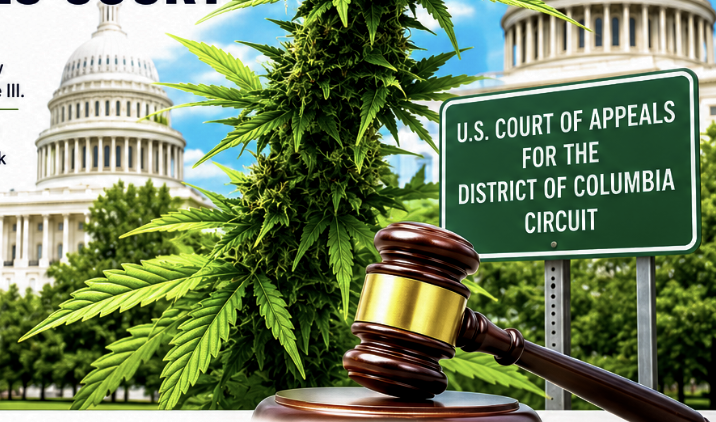
Within days, three separate legal challenges had been filed in the federal courts. Today, all of them are headed to the United States Court of Appeals for the District of Columbia Circuit - the most powerful federal appeals court in the country for cases involving federal agencies.
One of the challengers is not an anti-marijuana group.
MMJ International Holdings is a pharmaceutical company that has spent nearly a decade and more than ten million dollars trying to turn cannabinoid compounds into real FDA-approved medicine - for patients with Huntington's disease, multiple sclerosis, and other serious neurological conditions. MMJ did everything the government asked: protocols for clinical trials, FDA Orphan Drug Award, DEA registrations, drug safety studies, pharmaceutical manufacturing testing standards, and FDA IND applications. MMJ also completed manufacturing a final dose form soft gel capsule for it clinical trials.
Now MMJ is watching the federal government hand its competitors a fast lane - while MMJ is still waiting in line after nearly 2,500 days.
So it sued.
WHAT ACTUALLY HAPPENED - IN PLAIN ENGLISH
Here is what the federal government did, and why it matters to ordinary Americans:
1. The government moved marijuana to a lower-risk drug category overnight. Under a law called the Controlled Substances Act, drugs are ranked by their risk and medical use. Marijuana was in Schedule I - the most restricted category, alongside heroin. The April 28 order moved it to Schedule III, the same category as ketamine and some anabolic steroids. That sounds like a medical decision. But it was made without the scientific review the law requires.
2. It potentially eliminated a massive tax bill for the marijuana industry. A federal tax rule called Section 280E prevents businesses selling Schedule I or II drugs from deducting normal business expenses. State marijuana dispensaries have paid hundreds of millions of dollars in extra taxes under this rule for years. The moment marijuana moved to Schedule III, that tax burden disappeared. No vote. No hearing. One signature.
3. It created a fast-track registration for state marijuana operators. Any business already licensed by a state to sell marijuana can now get federal DEA registration in as little as six months. MMJ International Holdings has been applying for DEA registration for approximately 2,500 days - nearly seven years - under far stricter pharmaceutical standards. State dispensaries that never went through any of that process now get to cut the line.
4. It was done using a legal shortcut Congress designed for a narrow purpose. The Attorney General used a provision of the law meant to handle scheduling changes required by international treaties. Legal experts - and the government's own Office of Legal Counsel - have acknowledged that this provision has limits. The challengers argue those limits were exceeded.
5. It was done by government agencies that may not have had the authority to do it at all. Here is the part that almost no one is reporting: the Department of Justice has already admitted in a separate federal case - filed by MMJ itself - that the administrative judges used to make DEA drug decisions may be unconstitutional. Those same judges are now scheduled to conduct the next rescheduling hearing on June 29, 2026. MMJ can go to the D.C. Circuit right now and ask them to stop that hearing before it even begins.
THE ISSUE NOBODY IS TALKING ABOUT: PATIENT SAFETY
While the business and legal arguments get most of the attention, there is a patient safety dimension to this story that has been almost entirely ignored. Such as the denial of Charlottes Web product to the EU regulatory agency.
The April 28 order moved marijuana to Schedule III - a category normally reserved for drugs that have gone through FDA review for safety and effectiveness. But not a single marijuana product sold in state dispensaries has ever been approved by the FDA for any medical condition. The federal government just gave those products a Schedule III classification without the science that Schedule III is supposed to require.
What does that mean for patients?
A 70-year-old Medicare patient taking blood thinners, statins, and diabetes medication can now receive marijuana products through a federally endorsed program - with no clinical warning system in place for the drug interactions that CBD and THC are known to cause.
State dispensaries in 40 states sell products ranging from 5% THC flower to 95% THC concentrates. The order treats all of them as a single regulated category for federal purposes. They are not.
The rescheduling petition filed by MMJ and its co-petitioners makes this argument directly: the government failed to adequately consider the documented health risks of marijuana, including psychosis, impaired brain development in teenagers, addiction, respiratory damage, and cardiovascular harm. The DEA's own scientific review - conducted during the formal hearing process the government terminated - documented those risks extensively. The April 28 order never reconciled them.
'The government just gave marijuana products a federal medical classification without the science that classification is supposed to require. That is the patient safety issue at the core of this litigation.'
WHO IS FIGHTING THIS - AND WHY THEY ARE NOT WHO YOU THINK
The coalition challenging these federal actions includes:
Smart Approaches to Marijuana (SAM) - a public health organization focused on marijuana safety research and policy advocacy
Cannabis Industry Victims Educating Litigators (CIVEL) - an organization that represents people harmed by the marijuana industry, including individuals who developed psychosis or other serious conditions
New Directions Addiction Recovery Services - a substance abuse recovery clinic serving patients with cannabis use disorder
Dr. Kenneth Finn and Dr. Elizabeth Stuyt - board-certified physicians with decades of clinical experience treating patients harmed by high-potency marijuana products
Hillsborough County Anti-Drug Alliance - a local public health coalition
The National Drug and Alcohol Screening Association - a professional organization representing drug testing and workplace safety programs
MMJ International Holdings - a pharmaceutical cannabinoid developer pursuing FDA-approved cannabis medicines for serious neurological diseases
The cannabis industry press has called this coalition 'anti-marijuana.' That label does not fit.
MMJ International Holdings is one of the most heavily invested cannabinoid pharmaceutical developers in the United States. Its CEO Duane Boise has devoted nearly a decade to proving that cannabis compounds can be real medicine - if developed correctly. MMJ is not against cannabis medicine. It is against a system that rewards companies for skipping the science.
'We built this company to prove that cannabinoid medicine works when you do it right. What the government just did rewards everyone who didn't bother.'
THE BILLIONAIRE IN THE OVAL OFFICE
One of the most striking elements of the legal challenge - and the one that has gotten essentially zero coverage in mainstream media - involves how this rescheduling decision was made in the first place.
At the December 18, 2025 signing ceremony for the Executive Order directing marijuana rescheduling, President Trump publicly credited Howard Kessler - a Palm Beach billionaire, financial executive, and longtime personal friend of the President - as the driving force behind the decision. Secretary Robert F. Kennedy Jr. said at the same ceremony that without Kessler 'we wouldn't be here today,' and that Kessler 'drove this change in the schedule' based on his personal experience using cannabis during chemotherapy.
Federal drug scheduling law does not work that way. The Controlled Substances Act requires scheduling decisions to be based on scientific evidence: pharmacological research, clinical data, abuse potential studies, and medical evaluation. It does not provide for a billionaire donor's personal health experience to substitute for that process.
The legal term for making a government decision based on factors the law does not permit is 'arbitrary and capricious.' That is one of thirteen legal grounds on which MMJ's petition asks the D.C. Circuit to vacate the April 28 order.
The transcript of the Oval Office signing ceremony is publicly available. It is in the legal record. It is not going away.
WHAT HAS HAPPENED AND WHAT COMES NEXT
The speed of this litigation is extraordinary. Here is where things stand:
April 28, 2026: Acting AG Todd Blanche signs the rescheduling order. Marijuana moves to Schedule III effective immediately. The § 280E tax bar disappears for state marijuana businesses overnight.
May 22, 2026: A federal judge dismisses the first legal challenge to the CMS hemp reimbursement program on technical procedural grounds. He never rules on whether the program itself is legal.
May 28, 2026: MMJ and its co-petitioners file a direct legal challenge to the rescheduling order in the D.C. Circuit Court of Appeals, raising thirteen separate legal arguments.
June 4-5, 2026: Parallel challenges to the rescheduling order are filed and consolidated. MMJ files its appeal of the dismissed CMS case. Constitutional litigator Ilya Shapiro of Burke Law Group joins the legal team.
June 29, 2026: The DEA is scheduled to begin an expedited rescheduling hearing - conducted by the same administrative judges DOJ has already admitted may be unconstitutional. MMJ can ask the D.C. Circuit to stop this hearing before it starts.
CRITICAL DATE: If MMJ files an emergency motion to stay the June 29 DEA hearing, the D.C. Circuit could be forced to rule on the constitutional question within days. A stay would effectively freeze the rescheduling process until the courts decide whether the government had the authority to do what it did.
WHY THIS MATTERS TO PEOPLE WHO ARE NOT LAWYERS
This case is not just about marijuana. It is about a principle that affects every American who relies on the FDA to protect them when they take a medicine.
The FDA approval process exists because we learned - through disasters like thalidomide, through the opioid crisis, through decades of unsafe products harming patients - that drugs need to be tested before they are sold as medicine. The testing is slow. It is expensive. It is demanding. But it is how we know that a pill actually does what it says, at the dose it claims, without killing you when combined with your blood pressure medication.
What the federal government just did - through the CMS reimbursement program and the rescheduling order - is create pathways for marijuana products to reach patients as if they were medicine, without going through that process.
Meanwhile, a company that did go through that process - that spent ten million dollars, seven years, and the full weight of federal pharmaceutical compliance to develop real cannabinoid medicine for people with Huntington's disease and multiple sclerosis - is watching its competitors get federal endorsement for skipping it.
The courts are now being asked whether that is legal.
The D.C. Circuit's answer will matter to every pharmaceutical company that has ever invested in FDA compliance instead of looking for a faster way around it. It will matter to every Medicare patient whose doctor is now expected to navigate a drug without a package insert. It will matter to every cannabis patient who deserves to know that what they are taking has actually been tested.
'The company that spent a decade doing everything correctly is asking the courts to hold that doing everything correctly means something.'
About MMJ International Holdings, Inc.
MMJ International Holdings, Inc. is a U.S.-based biopharmaceutical company developing pharmaceutical-grade, plant-derived cannabinoid therapies for serious neurological conditions including Huntington's disease and multiple sclerosis. The company has pursued FDA approval through Investigational New Drug applications, Orphan Drug Designation, GMP manufacturing, and DEA-registered laboratory operations. It has invested more than $10 million over nearly a decade in the federal pharmaceutical pathway.
MEDIA CONTACT
Madison Hisey | [email protected] | 203-231-8583
SOURCE: MMJ International Holdings, Inc.
View the original press release on ACCESS Newswire
 Share
Share
 Tweet
Tweet
 Share
Share
 Flip
Flip
 Email
Email
Subscribe and Follow
Get a daily dose of North Carolina Daily news through our daily email, its complimentary and keeps you fully up to date with world and business news as well.


News RELEASES
Publish news of your business, community or sports group, personnel appointments, major event and more by submitting a news release to North Carolina Daily.
More InformationHegseth links migration concerns to D-Day anniversary event

PARIS, France: U.S. Defense Secretary Pete Hegseth used a speech marking the anniversary of the D-Day landings to urge European countries...
Strong hiring streak gives Fed room to hold rates steady

WASHINGTON, D.C.: The U.S. labor market continued to outperform expectations in May, with employers adding more jobs than forecast...
Jared Kushner’s luxury resort project in Albania in eye of storm

TIRANA, Albania: Thousands of people in Tirana protested this week against a plan to build a luxury resort on a sensitive stretch of...
Record SpaceX listing targets $75 billion raise and $1.77T value

NEW YORK CITY, New York: SpaceX is preparing for what could become the largest initial public offering in history, a deal that may...
After evacuation warning to villages, Israel strikes southern Lebanon

DIBBINE, Lebanon: Israel's air force carried out strikes in several areas of southern Lebanon on June 5, and the military told people...
Honeywell-backed Quantinuum jumps in strong market debut

NEW YORK CITY, New York: Quantinuum, the quantum computing company backed by Honeywell, saw its shares rise sharply in its Nasdaq debut...
